 English
 中文简体
中文简体 日本語
日本語 한국어
한국어 Español
 Language
With the increasing popularity of smart homes, more and more families are choosing to use mobile adjustable electric remote control TV stands. Compared to traditional fixed TV stands, mobile electric remote control stands not only offer more flexibility but also bring a more comfortable viewing experience to the family. However, when installing a mobile adjustable electric remote control TV stand, there are some things to pay special attention to to ensure the stability, safety, and effectiveness of the stand.
1. Choosing a Suitable Location
The first step in installing a mobile adjustable electric remote control TV stand is choosing a suitable location. The installation location of the stand needs to consider not only the viewing angle of the TV but also the range of motion of the stand and the surrounding environment.
Here are some factors to consider when choosing an installation location:
Viewing Angle: When installing a TV stand, the first thing to consider is the viewer's viewing angle. Ensure that the TV is installed at an ergonomic height to avoid excessive looking up or down, which can effectively reduce neck fatigue. Generally speaking, the center of the TV should be parallel to the viewer's eyes; the ideal installation height is approximately at eye level.
Space Requirements: Since the portable motorized remote control stand is adjustable, ensure there is sufficient space around it to prevent the TV from colliding with other furniture or walls during movement. Ensure the stand has enough room to move freely and avoid restricting its movement.
Power Outlet and Wiring: The motorized TV stand requires a power connection, so ensure there is a suitable outlet nearby. Additionally, consider the cable and wiring between the stand and the TV to prevent cable pulling or tripping.
2. Ensure the wall or floor is stable
The stability of the mobile adjustable electric remote control TV stand directly affects the safety of the TV. Therefore, before installation, you must confirm that the wall or floor where the stand will be fixed is stable enough.
Specific precautions are as follows:
Wall or floor material: If you choose to fix the stand to a wall, ensure that the wall material can support the weight of the stand and the TV. For drywall or soft walls, it is recommended to use specialized wall reinforcement or choose other fixing methods. For brick or concrete walls, ordinary expansion screws are sufficient to secure the stand.
Floor stability: If you choose to install the stand on the floor, ensure that the floor is flat and firm to avoid the stand tilting or becoming unstable due to uneven ground. In addition, if the stand has wheels, ensure that the floor is suitable for the movement of the wheels to prevent the wheels from getting stuck or scratching the floor.
3. Properly Connecting the Stand to the TV
When installing the stand, align the mounting plate of the stand with the VESA interface on the back of the TV. The VESA (Video Electronics Standards Association) interface is a standardized TV mounting interface supported by almost all TVs.
During installation, ensure the following:
Specification Match: First, confirm that the TV's mounting holes are compatible with the stand's mounting plate. Specifications include the distance between the holes; ensure the stand's holes perfectly match the TV's.
Screws and Accessories: Using appropriate screws and tools is crucial when installing the stand. Most electric remote control TV stands come with mounting screws and accessories, but if missing or needing replacement, use screws compatible with your TV model. Screws that are too long or too short can affect the stability of the installation and may even cause the TV to fall.
Avoid Overtightening: When securing the TV, avoid overtightening the screws, as this can damage the back of the TV or prevent proper installation. Tighten the screws moderately to ensure a secure connection between the TV and the stand.
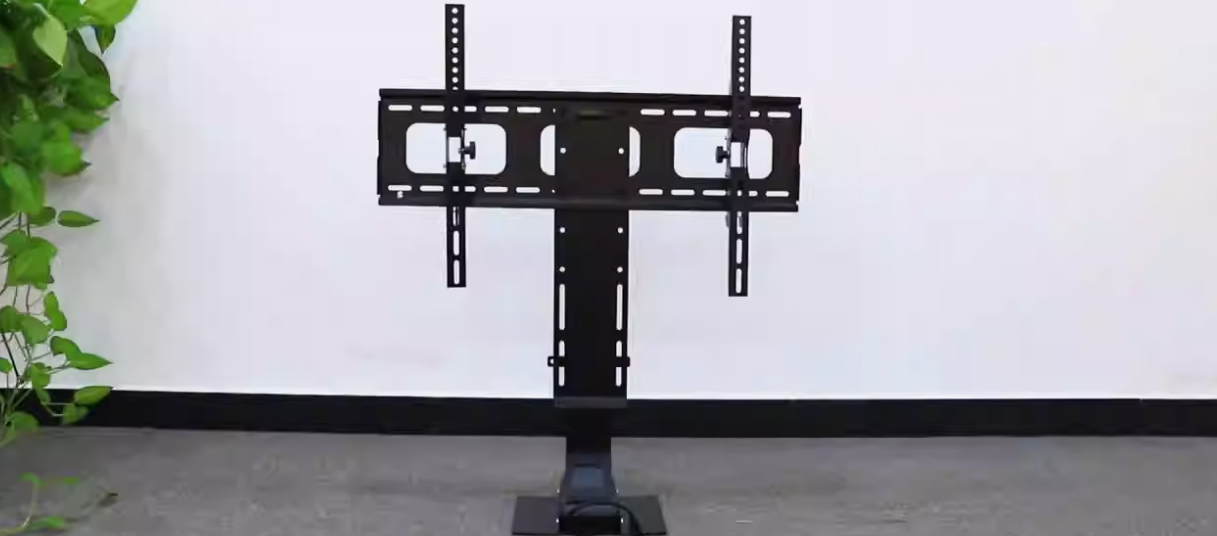
4. Installation of the Electric Remote Control System
Mobile electric remote control TV stands usually have an electric adjustment function. When installing the electric remote control system, pay special attention to the following points:
Power Connection: The electric remote control system requires a power source. Ensure the power cord connection is secure and safe. Avoid loose or broken power cords. It is recommended to use a suitable power cord protector to prevent cable wear.
Remote Control Battery Installation: Most electric remote control stands come with a remote control, which usually requires batteries. When installing batteries, pay attention to the correct polarity and ensure the batteries do not leak to avoid damaging the remote control.
Electric Adjustment Function Test: After installation, use the remote control to test the electric adjustment function of the stand. Ensure the stand can rise, lower, tilt, or rotate smoothly. During testing, observe the stand for any jamming or instability. If any is found, check if the installation is secure and if the motor is working properly.
5. Safety and Stability Check
After installation, a safety and stability check must be performed to ensure the stand provides sufficient support and safety during use.
TV Stability Check: Gently shake the TV to ensure it is firmly fixed to the stand and does not wobble. If the TV wobbles or tilts, check the connection between the bracket and the TV to ensure the screws are tight and the bracket is stable.
Bracket Balance Check: Confirm the bracket is stable and level. Poor bracket balance may cause the TV to tilt or become unstable during adjustments. Use a level to check the bracket's levelness and ensure stability during adjustments.
6. Safety Precautions During Operation
During use, avoid excessively frequent adjustments to the portable adjustable motorized remote control TV bracket, especially when moving the TV significantly, to prevent overloading. Furthermore, keep children and pets away from the bracket to prevent accidents during adjustments.
Installing a portable adjustable motorized remote control TV bracket is a meticulous and careful process. Correct installation not only improves the TV viewing experience but also ensures the TV's stability and lifespan. By choosing a suitable installation location, ensuring the stability of the wall or floor, accurately connecting the bracket to the TV, installing the motorized remote control system, and conducting a safety check, problems during installation can be effectively avoided, ensuring the bracket's safety and reliability during use.