 English
 中文简体
中文简体 日本語
日本語 한국어
한국어 Español
 Language
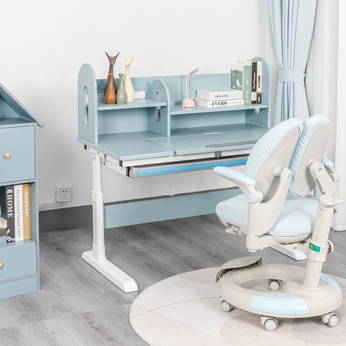
With the increasing academic burden on children, poor posture over a long period has become a significant factor affecting their health. Problems such as scoliosis, cervical fatigue, and shoulder and back pain are on the rise among children. To address this issue, children's height adjustable study desks help children maintain correct posture by flexibly adjusting the height of the desktop and chair. So, can children's adjustable study desks really effectively improve children's posture?
1. Adjustable desktop height to maintain natural spinal curvature
(1) Adjusting desktop height according to height
Children's height varies significantly at different stages of growth. Fixed-height study desks often cannot adapt to children's growth, easily leading to children leaning forward, shrugging their shoulders, or stretching their necks. Adjustable study desks can adjust the desktop height according to the child's height and posture habits, ensuring that the child's hands are placed naturally, shoulders are relaxed, and the spine maintains a natural S-shaped curvature.
(2) Reduce fatigue caused by prolonged desk work
When the desktop height is appropriate, children sit naturally and comfortably, reducing muscle fatigue in the back, neck, and waist, thus fostering healthy study habits. With consistent use, children's sitting habits will gradually stabilize, and their spinal development will be healthier.
2. Adjustable seat height, feet flat on the ground
(1) Ensure feet are on the ground, improving stability
Adjustable children's study desks usually feature a synchronously adjustable seat height. When adjusted to a suitable height, children's feet can be placed flat on the ground, with knees at approximately 90°. This not only maintains a stable center of gravity but also helps the spine maintain a naturally upright position.
(2) Promote blood circulation, prevent leg fatigue
Legs dangling or excessively bent can easily cause poor blood circulation, leading to numbness or fatigue in the legs. Adjustable seat height solves this problem, allowing children to maintain a comfortable sitting posture during study and improving concentration.
3. Tilted Desktop Design to Protect Cervical Spine and Vision
(1) Tilted Desktop Reduces Forward Head Tilt
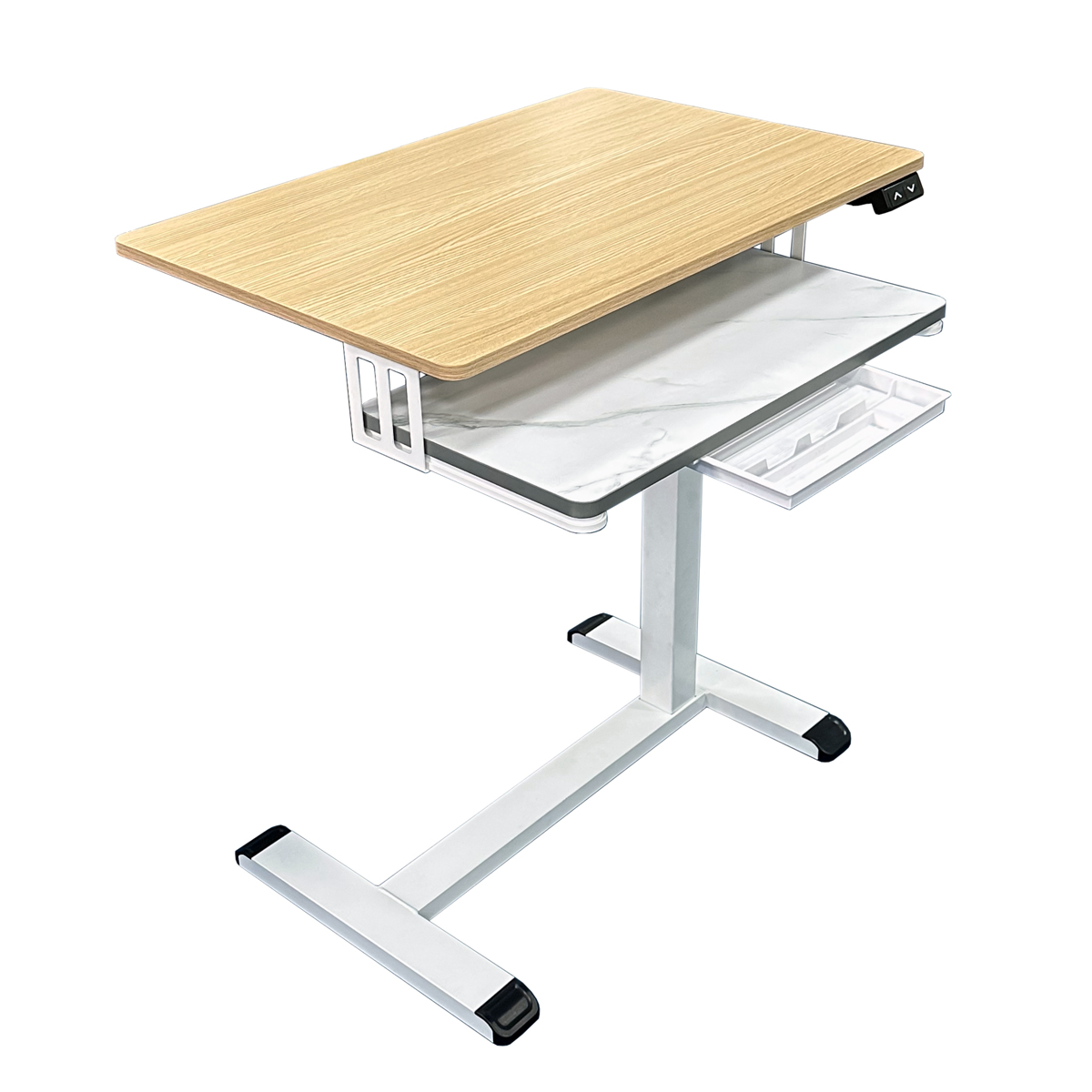
Most modern height-adjustable children's desks feature a tilting desktop. When writing or drawing, a moderately tilted desktop allows children to maintain a reasonable distance between their eyes and the book, reducing the amount of head tilting and effectively protecting the cervical spine.
(2) Improved Viewing Angle, Reduced Eye Fatigue
When the desktop tilt angle is properly adjusted, the child's line of sight is parallel to the desktop, avoiding prolonged head tilting and reducing eye fatigue and the risk of myopia. This is also an important factor in improving posture.
4. Ergonomic Design to Aid Good Posture
(1) Backrest and Desktop Alignment
The backrest of children's adjustable desks is usually ergonomically designed, supporting the child's lower back and maintaining the natural curvature of the spine. The backrest height and angle can be adjusted according to height, helping children form correct posture memory.
(2) Overall Coordination of Desk and Chair
The desktop and chair heights are adjusted synchronously to ensure that the child's elbows, shoulders, and back are coordinated, avoiding body tilting or forward leaning. This design not only improves posture but also reduces the physical burden caused by prolonged study.
5. Cultivating Good Study Habits
(1) Posture is related to concentration
A comfortable sitting posture allows children to focus more on learning content and avoid frequently changing positions due to physical discomfort. Adjustable study desks provide appropriate posture support, making it easier for children to maintain concentration.
(2) Developing correct sitting habits from an early age
As children grow, fixed-height desks and chairs often cannot adapt to changes in height. Adjustable study desks allow children to maintain correct posture at different stages of growth, helping to form healthy sitting habits in the long term and reducing the incidence of spinal problems.
Children's height adjustable study desks, through flexible adjustment of desktop and chair height, desktop tilt design, and ergonomic assistance, can indeed effectively improve children's sitting posture problems. It not only ensures spinal health, protects the cervical spine and eyesight, but also improves learning comfort and concentration.